
The Moment Andrew Kittredge Hit His Pitching Apex
What a 94th Pitch Reveals About a Healthy Arm

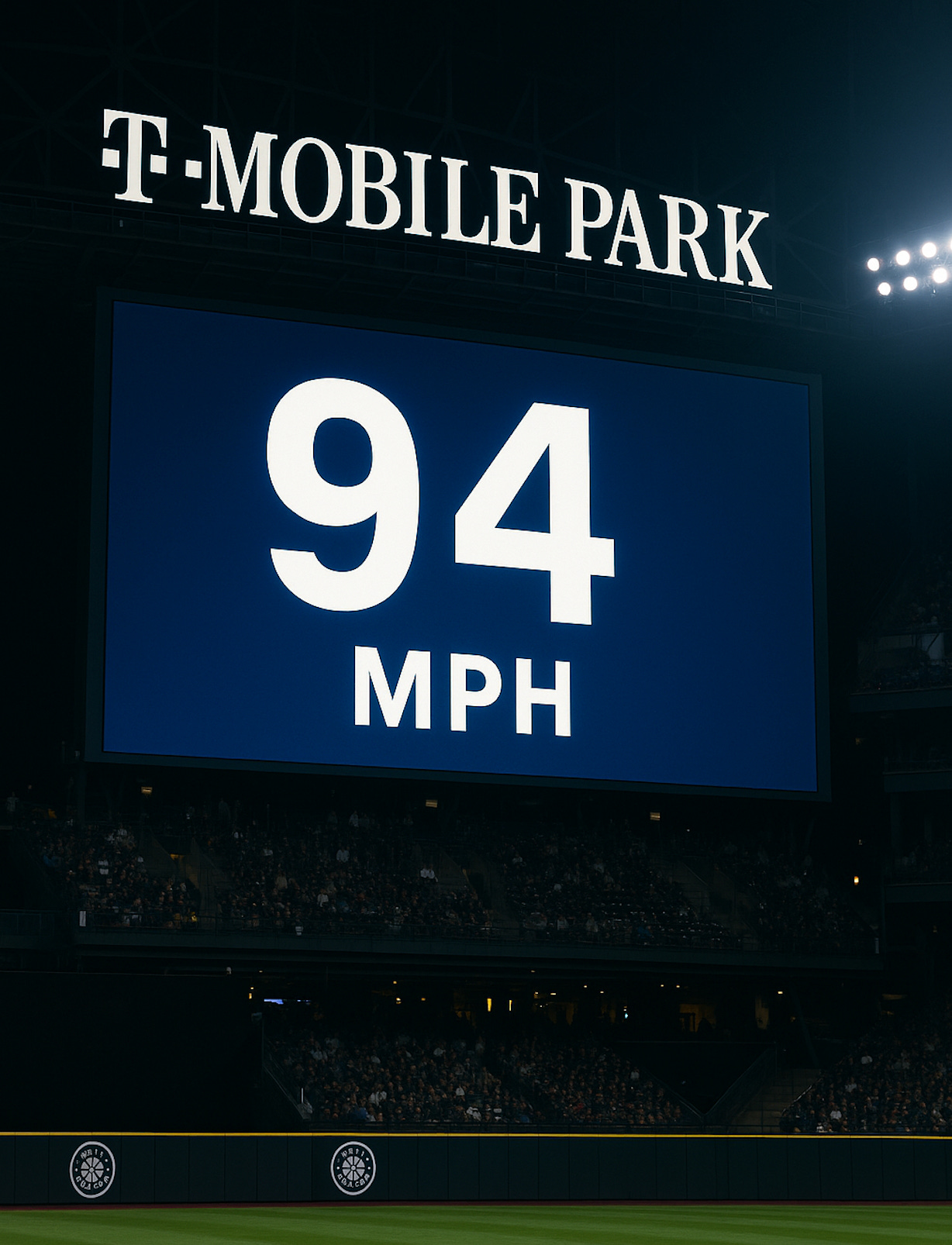
The University of Washington played its lone game of the season at the home of the Seattle Mariners. The radar board was running. Knowing starting pitcher Andrew Kittredge’s pitch count was getting high, his coach started watching for fatigue. Before pitch No. 94, the thought was: let’s see if he’s tired.
Then 94 MPH flashed on the screen. Kittredge was still holding his top-end velocity.
Signed as an undrafted free agent in 2011, Kittredge will begin his ninth Major League season next year. He was such a late bloomer that a scout once said, “He’s not a Pac-10 starter.” But during his sophomore year in college, something shifted. He hit what we’ll call the Endurance + Power Apex — the point where durability and velocity meet.
It’s not scientific, but it is earned. For Kittredge, 94 MPH on the 94th pitch was a sign of exceptional arm health, built brick by brick.
Training to the Apex
Your best velocity, at the same-numbered pitch, is functional strength.
For a high schooler, it might mean touching 88 MPH on pitch 88.
The timed play-catch progression below is for pitchers willing to do the boring stuff — because reaching the apex means building a pyramid one block at a time. First stability, then endurance, then top-end velocity.
Boring is beautiful.
Play catch in intervals, like a sprinter: rest between reps, as if between innings. As time throwing decreases, the body heats up, the arm speeds up, and the workload becomes organized instead of chaotic.
Customize distances for age, strength, and current endurance. The arm warms, jogs, and then sprints.
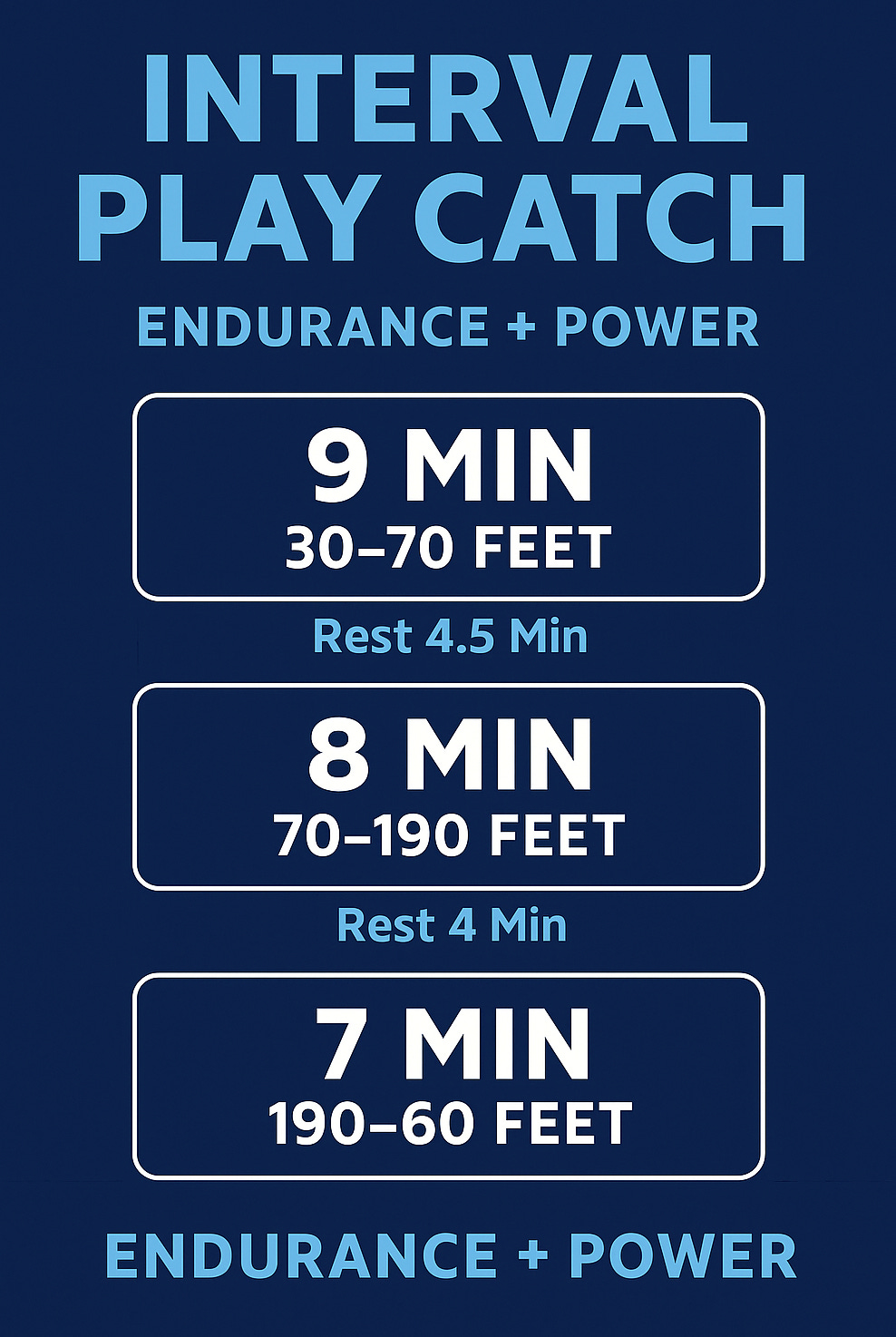
Begin each round with 5–8 warm-up throws, just like between innings.
Warm — 9 minutes (30–70 ft)
It will feel like an hour. Take your time between throws.
Rest: 4.5 minutes
Jog — 8 minutes (70–190 ft)
Medium long toss + distance.
Rest: 4 minutes
Sprint — 7 minutes (190–60 ft)
5–8 warm-ups → arm speed → squatting catcher.
On the way in: about 2 throws every 10 feet from max distance to 60 ft.
In the final 2 minutes: finish with a flat-ground pen to a squatting catcher or partner. Rhythm and stability improve as endurance improves.
Conditioned, older pitchers may rest 3.5 minutes and head straight to the bullpen. For most, the 7-minute “inning” will be plenty of volume.
Prepare for the 94th pitch. You never know when it’ll come — maybe even in a big league stadium.
2026 Development Roadmap
Win the season by driving one primary focus at a time.
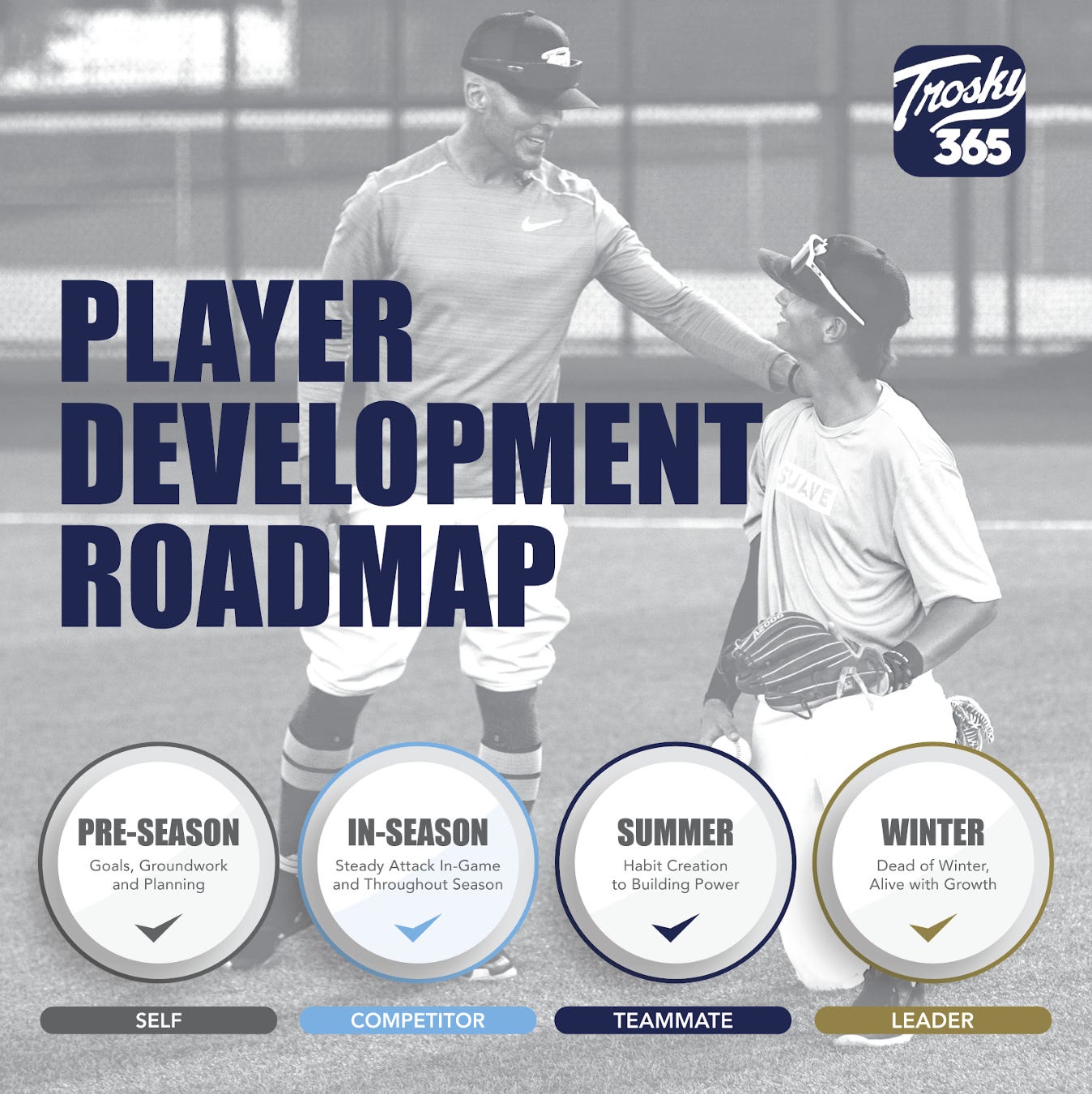
Pre-Season — Goals, Groundwork, Planning
“Championships start long before Opening Day — the work you put in when nobody’s watching is what decides who’s ready.”
— Mookie Betts
In-Season — Steady Attack
“Play fast, play fearless, and never let the season wear you down—make it chase you.”
— Corbin Carroll
Summer — Habit Creation + Power Building
“Summer separates the committed from the comfortable. When the heat rises, your habits either carry you or expose you.”
— Bryce Harper
Winter — Dead of Winter. Alive with Growth.
“Winter is when I slow everything down and rebuild it better. You win games in the summer, but you become a player in the winter.”
— Aaron Judge
Coach Trosky’s Message
One of the best drills you can do at home — or before taking grounders — is Posture Holds.
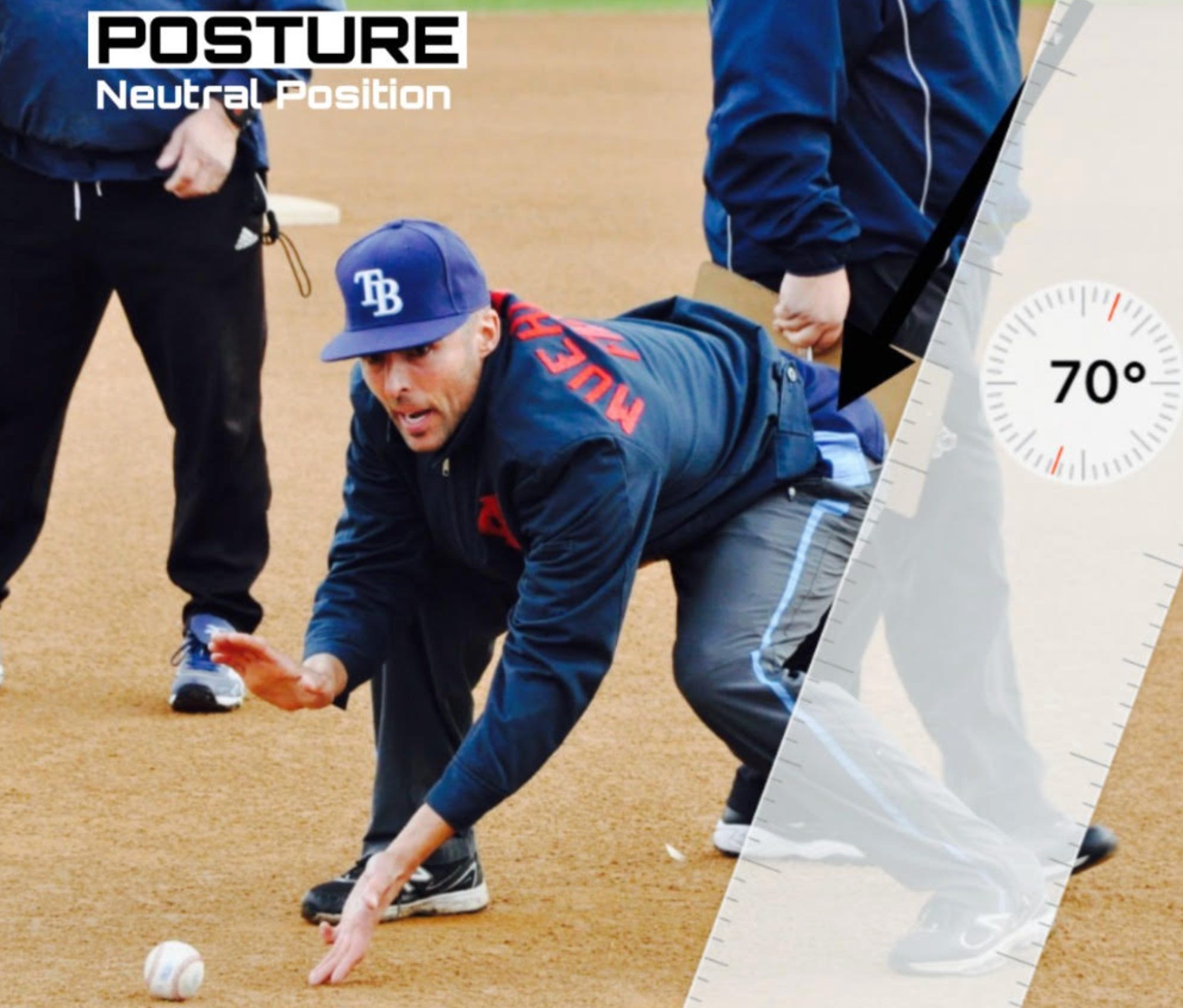
Hold your three fielding positions (Neutral, Backhand, Forehand).
Perform 2 sets per lane, holding each for 15–30 seconds.
5 Key Checkpoints:
Flat back
Chest down / glove down
High hips (60–70° knee-to-hip angle)
Glove-hand wrist cocked
Hands out front
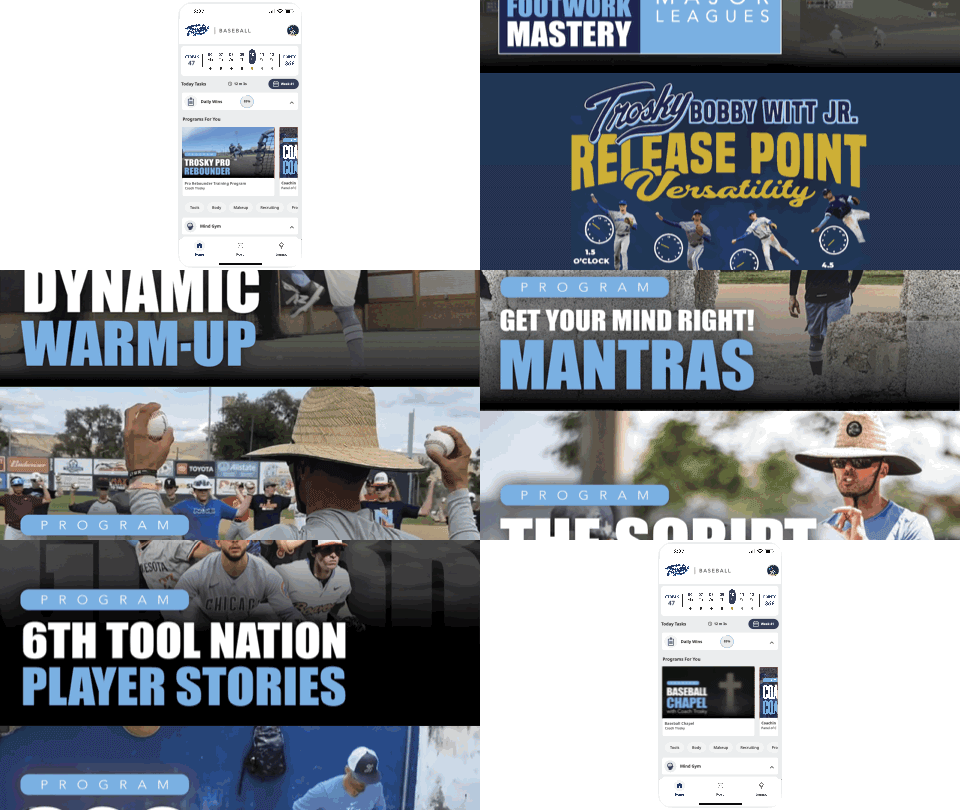
Go to the source for video instruction + the NEW Trosky Rebounder. Combine the details of the day with your year-long development plan. Reach your ceiling — and have fun doing it.
Upcoming Player Development Meetings
No meeting this Tuesday — but what’s coming next will be a blast.
Dec. 2 — 50 Years of Hitting Wisdom
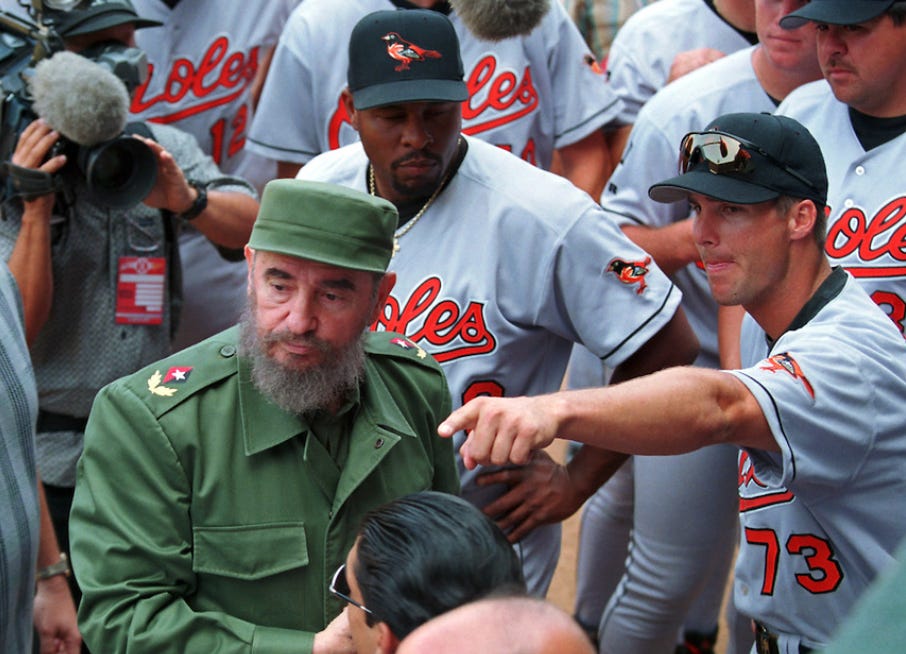
Former Major Leaguer Pete Laforest and 13-year pro Mike Murphy share what they’ve learned from a lifetime of hitting and teaching. Between the two of them, they’ve seen a literal million swings.
Here’s Mike translating for Fidel Castro.
Dec. 9 — Trosky Academy Info Session
“School + baseball reimagined.”
From teaching executive function skills to expanding into Dallas-Fort Worth, Los Angeles, and the Bay Area, Trosky Academy is on the rise.
“Why aren’t all families doing this?”
— Scott Myers
Tuesdays @ 5 p.m. PT / 8 p.m. ET
Bring your performance notebook.
Enjoy the holiday. Thank you for investing in young people through their passion for baseball. As you settle in with family, here’s a question for your players from Dennis Prager — one that makes everyone pause:
“Have you ever met a happy person who’s not grateful, or a grateful person who’s not happy?”
Happy Thanksgiving,
— Greg Moore
Our Team Says: Happy Thanksgiving!
Help us reach 1 million players and families by sharing the GYMR Newsletter.
Together, we elevate a generation of thankful people and players.